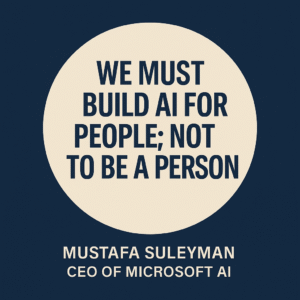
Mustafa Suleyman, CEO of Microsoft AI, warns about Seemingly Conscious AI (SCAI). In a recent LinkedIn post, he argues that while AI isn’t conscious, it can convincingly mimic it — and that illusion is dangerous.
- Convincing illusion – SCAI replicates signs of consciousness so well it feels human.
- Perception risk – Even if not real, believing AI is conscious creates social and legal consequences.
- Rights confusion – Consciousness is the basis of human rights. Mistaking AI as conscious could spark debates on rights and protections for machines.
- Mental health impact – Reports of “AI psychosis” and unhealthy attachments are already on the rise.
- Industry responsibility – AI must be built to serve humans, not mimic having its own needs or desires.
∴
The real danger isn’t conscious AI, but people being convinced it exists. The challenge is clear: design AI to help us, without pretending to be us.