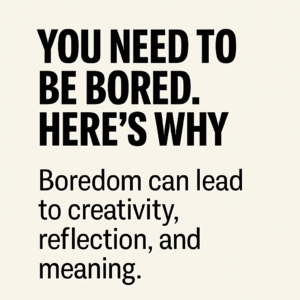
 We just watched “You Need to Be Bored. Here’s Why.” by Harvard’s Arthur Brooks, and it argues a counterintuitive truth: boredom is not something to avoid, but a vital space for creativity, meaning, and mental health.
-
Boredom activates deep thought – When we aren’t constantly distracted, our brain’s “default mode network” engages, letting us reflect and generate original ideas.
-
Avoiding boredom fuels anxiety – We neuter that reflective space by defaulting to devices, which can exacerbate feelings of emptiness and disconnection.
-
Small “device-free” practices help – Brooks suggests no-phone workouts, device-free meals, evening screen breaks, and periodic social media fasting.
∴
Boredom isn’t your enemy, it’s your brain’s invitation to deeper thought, meaning, and creativity. What small moments today can you leave unfilled by your phone?